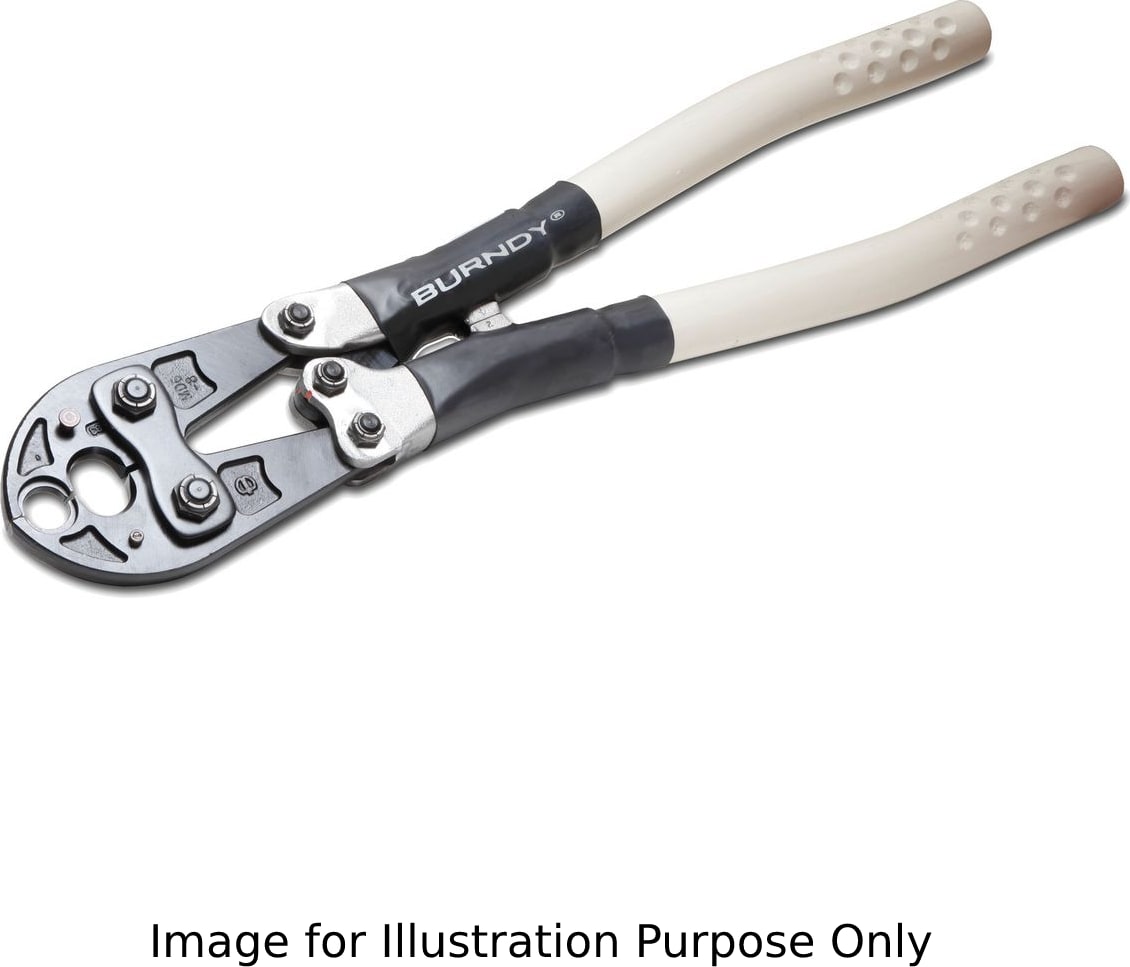
Burndy MD68 – HYTOOL Ручной обжимной инструмент с канавками O/D3, рукоятки из орехового дерева
22.01.2025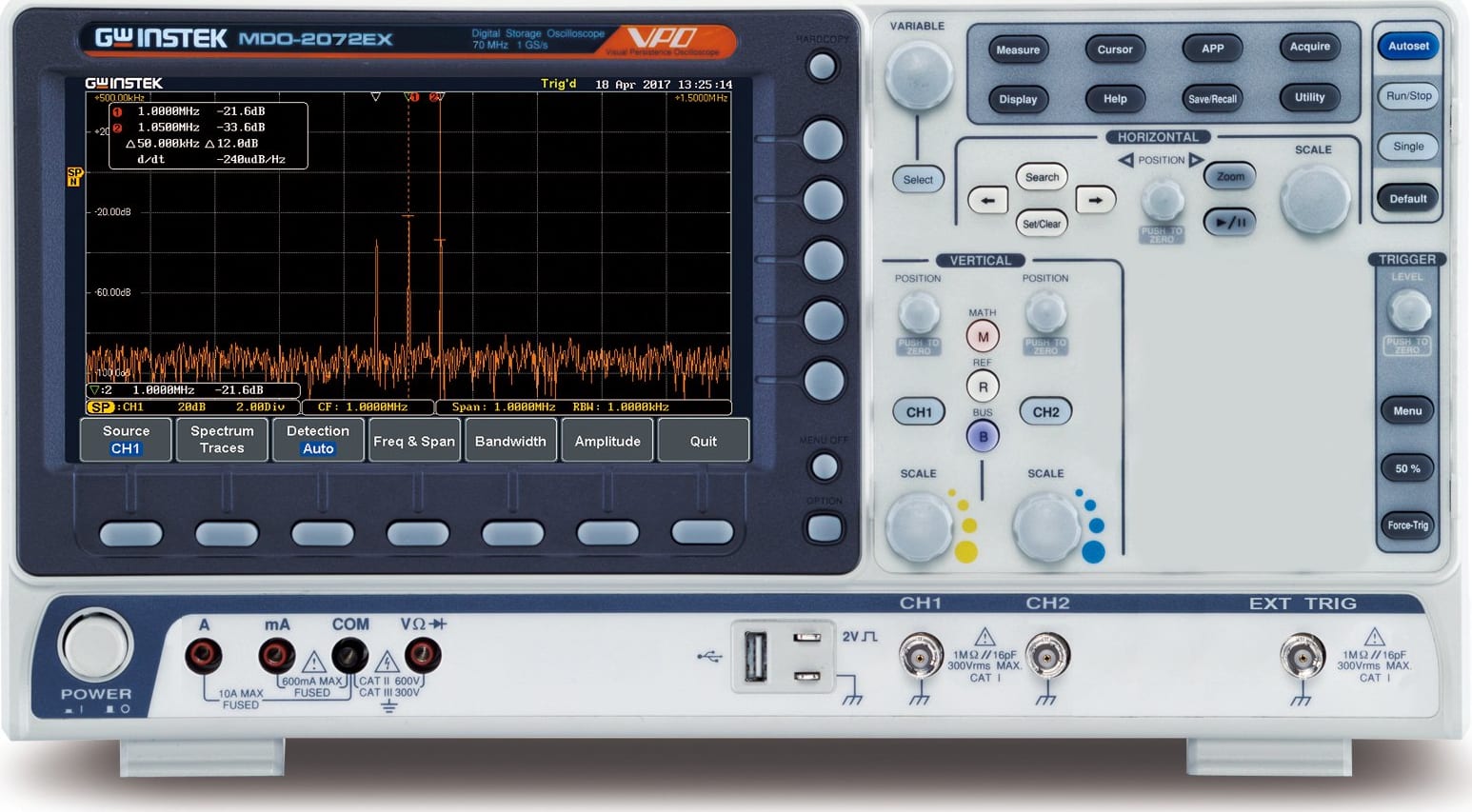
Instek MDO-2072EX – 2-канальный/70 МГц DSO с анализатором спектра, 25 МГц AWG, DMM и блоком питания
22.01.2025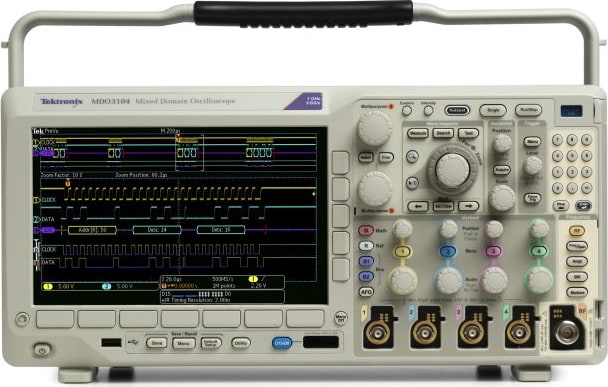
Tektronix MDO3014 – Mixed Domain Oscilloscope (4 Channels, 100 MHz Bandwidth)
Mixed Domain Oscilloscope, (4) 100MHz analog channels, 10M record length, 100MHz spectrum analyzer, 3-year warranty, Certificate of Traceable Calibration Standard
1784250,00 ₽
Description Tektronix MDO3014 – Mixed Domain Oscilloscope (4 Channels, 100 MHz Bandwidth)
- Bandwidth: 100 MHz
- Channels: 4
- Memory: 10 Mpoints
- Sample Rate: 2.5 GS/s
- Spectrum Analyzer: 100 MHz Standard, Up to 3 GHz (Optional)
- Logic Analyzer Upgrade to 16 Channel (Optional)
- Arbitrary Function Generator Output (Optional)
Today’s integrated designs need an oscilloscope that is just as integrated – such as the Tektronix MDO3014 Mixed Domain Oscilloscope (MDO) Series. It is the ultimate 6-in-1 integrated oscilloscope that includes an integrated spectrum analyzer, arbitrary function generator, logic analyzer, protocol analyzer, and digital voltmeter/counter. The Tektronix MDO3014 is completely customizable and fully upgradeable. Add the instruments and performance you need now – or later.
A powerful scope is only the start
Today’s engineering world is dominated by multi-core processors, serial buses, and wireless interfaces. At the heart of the Tektronix MDO3014 is a tried-and-true Tektronix oscilloscope paired with a base spectrum analyzer and digital voltmeter.
Accurate Measurements Matter
Put simply, the Tektronix MDO3014 Series scope is designed to make the most accurate measurements in the industry. While many other instruments only offer low-resolution display data, the Tektronix MDO3014 takes measurements on actual acquisition data, providing an unrivaled view into your designs.
Make Wireless Measurements like an RF Expert without having to become one
Are wireless communications and EMI considerations pulling you from your comfort zone? Or are you an RF expert who needs an oscilloscope capable of making time and frequency domain measurements? Either way, the Tektronix MDO3014 oscilloscope with a built-in spectrum analyzer is up to the task.
Digital phosphor technology with FastAcq® highspeed waveform capture
To debug a design problem, first you must know it exists. Every design engineer spends time looking for problems in their design, a time consuming and frustrating task without the right debug tools.
Digital phosphor technology provides you with fast insight into the real operation of your device. Its fast waveform capture rate – greater than 280,000 wfms/s with FastAcq – gives you a high probability of quickly seeing the infrequent problems common in digital systems: runt pulses, glitches, timing issues, and more.
To further enhance the visibility of rarely occurring events, intensity grading is used to indicate how often rare transients are occurring relative to normal signal characteristics. There are four waveform palettes available in FastAcq acquisition mode.
- The Temperature palette uses color-grading to indicate frequency of occurrence with hot colors like red/yellow indicating frequently occurring events and colder colors like blue/green indicating rarely occurring events.
- The Spectral palette uses color-grading to indicate frequency of occurrence with colder colors like blue indicating frequently occurring events and hot colors like red indicating rarely occurring events.
- The Normal palette uses the default channel color (like yellow for channel one) along with gray-scale to indicate frequency of occurrence where frequently occurring events are bright.
- The Inverted palette uses the default channel color along with grayscale to indicate frequency of occurrence where rarely occurring events are bright.
These color palettes quickly highlight the events that over time occur more often or, in the case of infrequent anomalies, occur less often.
Infinite or variable persistence choices determine how long waveforms stay on the display, helping you to determine how often an anomaly is occurring.
Digital phosphor technology with FastAcq enables greater than 280,000 wfms/s waveform capture rate and real-time color-intensity grading.
Triggering
Discovering a device fault is only the first step. Next, you must capture the event of interest to identify root cause. To enable this, the Tektronix MDO3014 contains over 125 trigger combinations providing a complete set of triggers – including runt, logic, pulse width/glitch, setup and hold violation, serial packet, and parallel data – to help quickly locate your event of interest. And with up to a 10 M record length, you can capture many events of interest, even thousands of serial packets, in a single acquisition for further analysis while maintaining high resolution to zoom in on fine signal details.
Over 125 trigger combinations make capturing your event of interest easy.
Waveform analysis
Verifying that your prototype’s performance matches simulations and meets the project’s design goals requires analyzing its behavior. Tasks can range from simple checks of rise times and pulse widths to sophisticated power loss analysis and investigation of noise sources.
The oscilloscope offers a comprehensive set of integrated analysis tools including waveform- and screen-based cursors, automated measurements, advanced waveform math including arbitrary equation editing, FFT analysis, waveform histograms, and trend plots for visually determining how a measurement is changing over time.
Waveform histogram of a rising edge showing the distribution of edge position (jitter) over time. Included are numeric measurements made on the waveform histogram data.
Video design and development
Many video engineers have remained loyal to analog oscilloscopes, believing the intensity gradations on an analog display are the only way to see certain video waveform details. The fast waveform capture rate of the Tektronix MDO3014 coupled with its intensity-graded view of the signal, provides the same information-rich display as an analog oscilloscope, but with much more detail and all the benefits of digital scopes.
Standard features such as IRE and mV graticules, holdoff by fields, video polarity, HDTV and custom (nonstandard) video triggers, and an Autoset smart enough to detect video signals, make these the easiest to use oscilloscopes on the market for video applications. And with high bandwidth, four analog inputs, and a built-in 75 Ω input termination (not available on 1 GHz models), the oscilloscope provides ample performance for analog and digital video use. There is even a video picture mode enabling you to see the picture of the video signal you are viewing – for NTSC and PAL signals.
Viewing an NTSC video signal. Notice the intensity-graded view provided by the Tektronix MDO3014’s ability to represent time, amplitude, and distribution over time.
Power analysis (optional)
Ever increasing consumer demands for longer battery-life devices and for green solutions that consume less power require power-supply designers to characterize and minimize switching losses to improve efficiency. In addition, the supply’s power levels, output purity, and harmonic feedback into the power line must be characterized to comply with national and regional power quality standards. Historically, making these and many other power measurements on an oscilloscope has been a long, manual, and tedious process.
The Tektronix MDO3014’s optional power analysis tools greatly simplify these tasks, enabling quick, repeatable and accurate analysis of power quality, switching loss, harmonics, safe operating area (SOA), modulation, ripple, and slew rate (di/dt, dv/dt). Completely integrated into the oscilloscope, the power analysis tools provide automated, repeatable power measurements with a touch of a button. The optional power analysis functionality is offered free for a 30-day trial period. This free trial period starts automatically when the instrument is powered on for the first time.
Power Quality measurement table. Automated power measurements enable quick and accurate analysis of common power parameters. The ultimate 6-in-1 integrated oscilloscope, completely customizable and fully upgradeable
Похожие товары
-
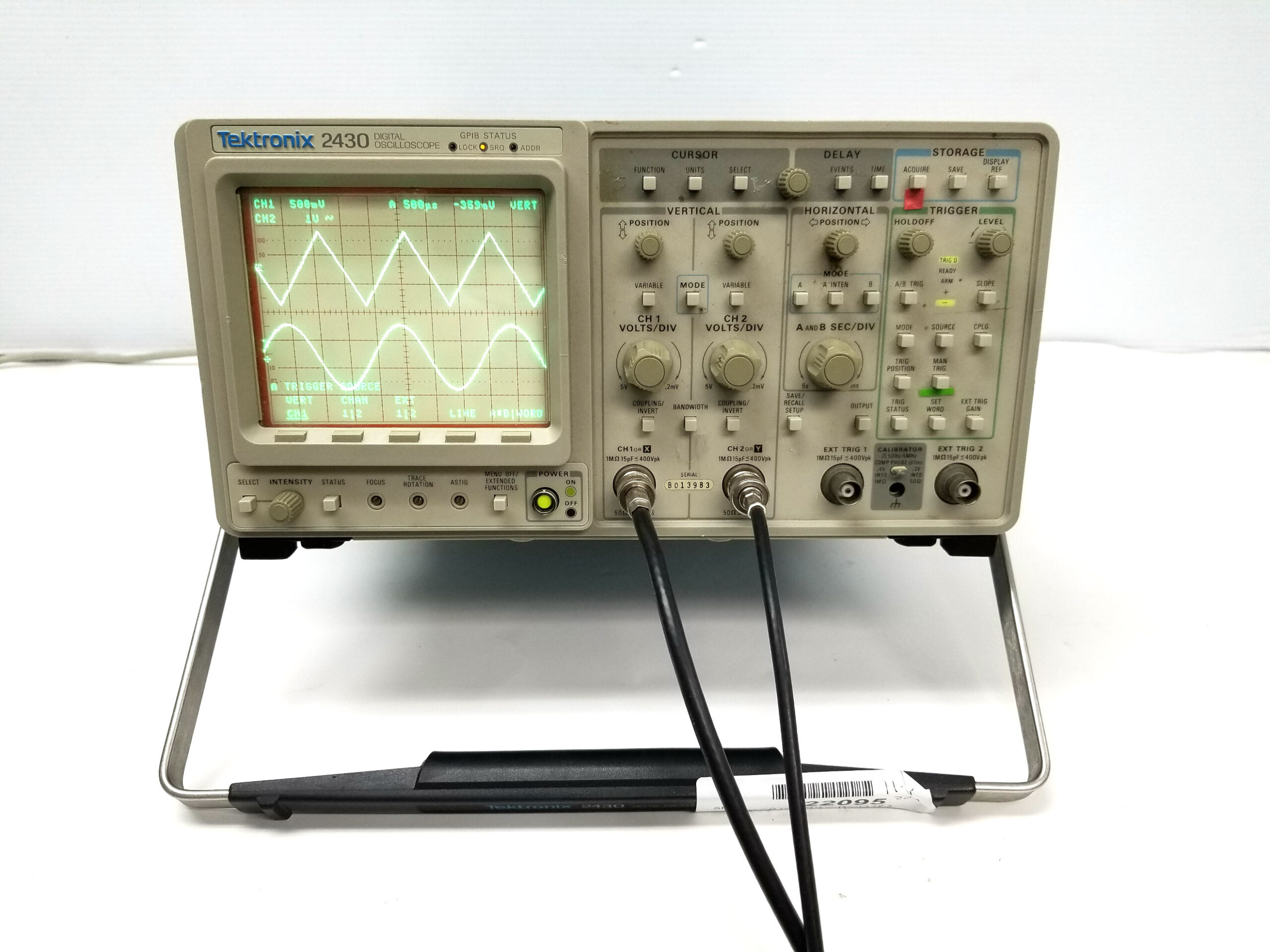
Tektronix 2430 Digital Oscilloscope 2 Channel
73125,00 ₽This is a Tektronix 2430 Digital Dual Trace Oscilloscope..
-
Tektronix DPO7254 Oscilloscope (PARTS/ REPAIR)
562500,00 ₽Additional information Weight 35 lbs Dimensions 24 × 24 × 18 in
-
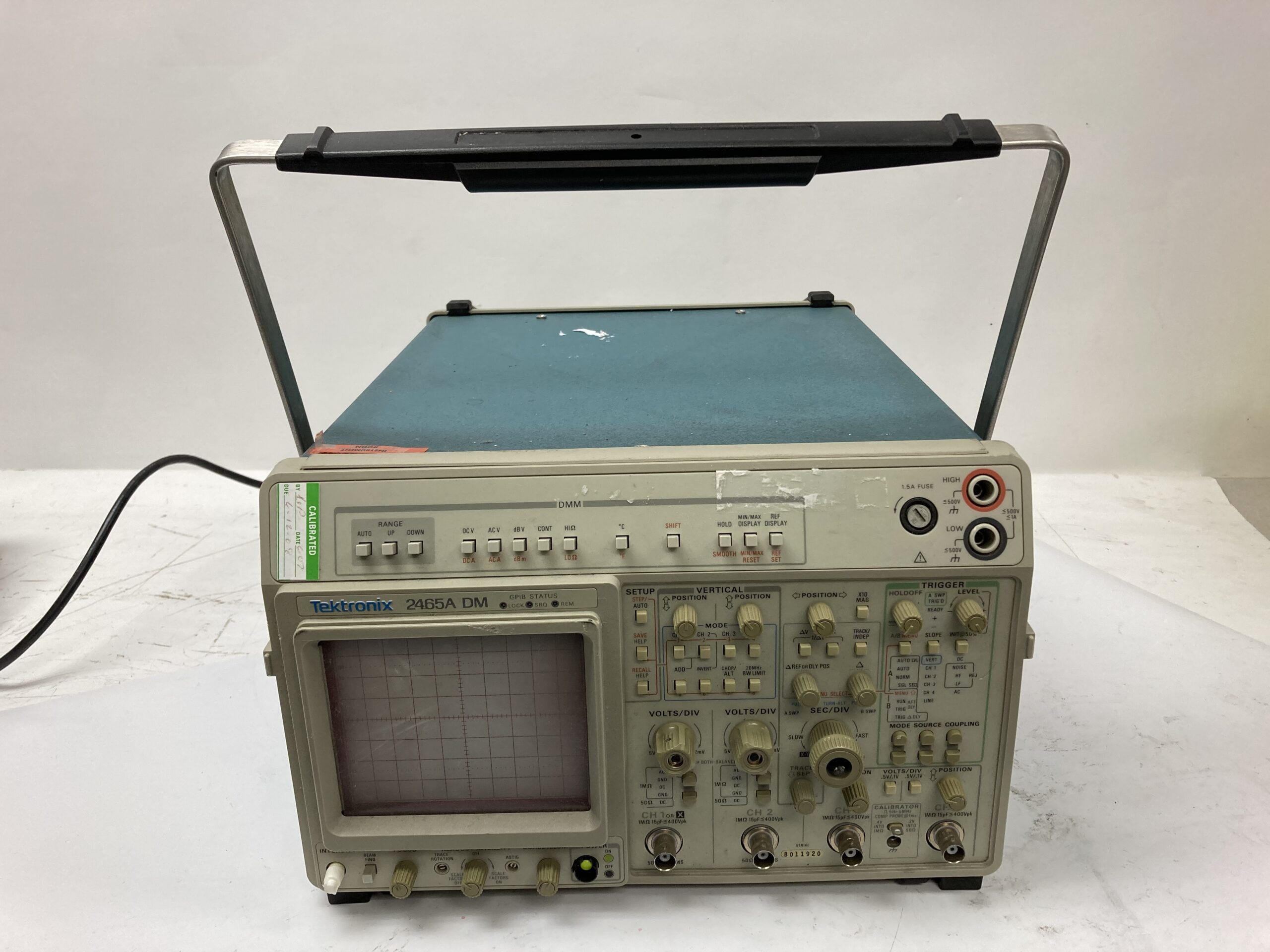
Tektronix 2465A DM Oscilloscope (parts only)
45000,00 ₽Tektronix 2465A DM Oscilloscope (parts only) Unit Powers On with No Dispaly Screen Needs Repair, Parts Only Check BMI Stock for More Items ***72109***